
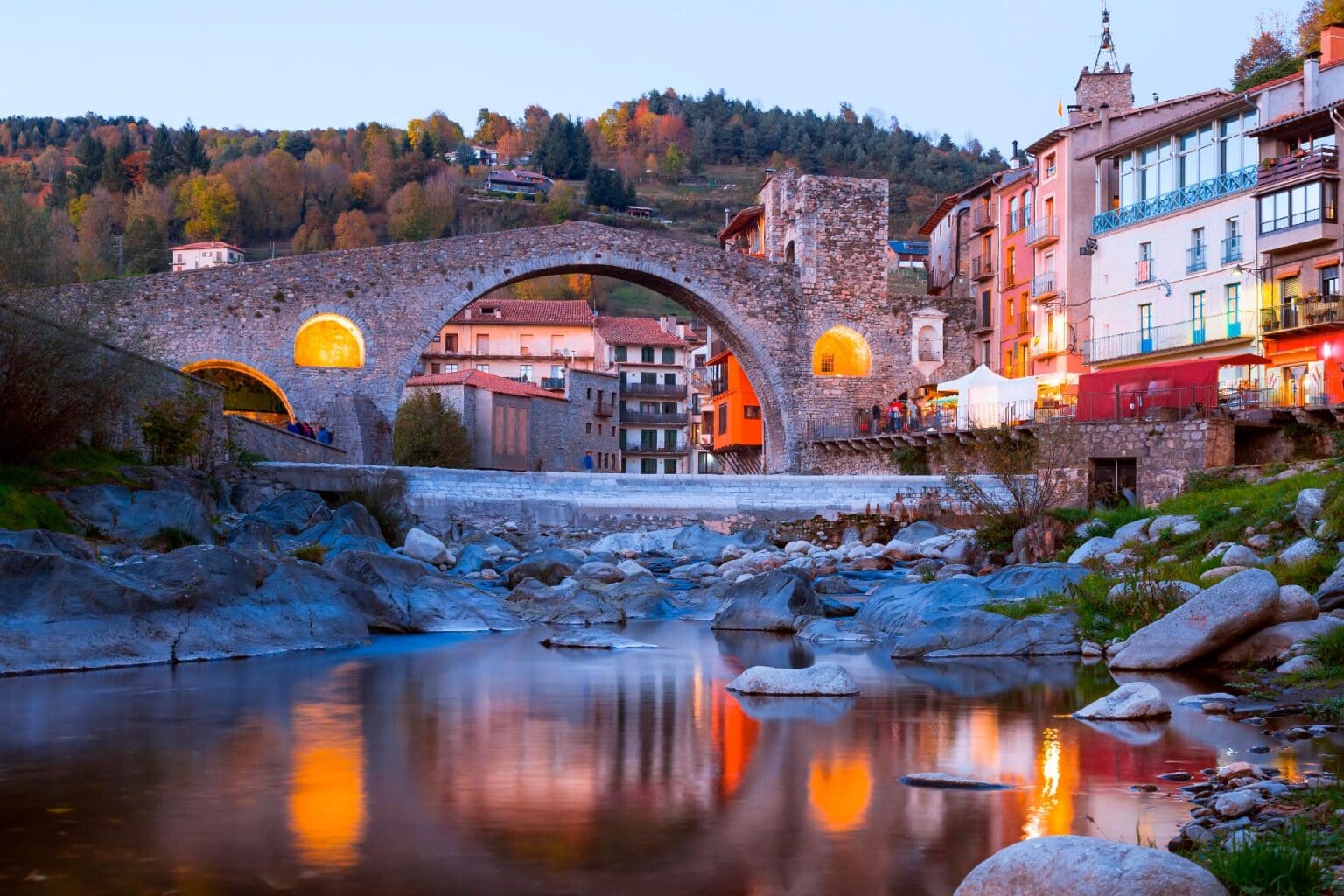
Camprodón, a small village located in the heart of the Catalan Pyrenees, is a true hidden treasure. With its stunning mountain landscape, its rich history and culture, and its vibrant gastronomic scene, Camprodón offers a unique experience for visitors. This picturesque village is an ideal destination for those seeking to escape the hustle and bustle of the city and immerse themselves in the natural beauty and tranquility of the mountains.
Table of Contents
Camprodón is known for its impressive medieval architecture, its cobbled streets, and its stone houses with red-tiled roofs. The village is surrounded by mountains covered in green forests, making it a perfect place for lovers of nature and outdoor activities. Additionally, Camprodón is famous for its delicious local gastronomy, which includes traditional dishes such as butifarra and trinxat.
In 1 minute: the essentials
- Icon: the Pont Nou (New Bridge) over the Ter River.
- Heritage: Monastery of Sant Pere (Saint Peter) and Church of Santa Maria.
- Urban walk: old town + riverbank + (if you have time) Passeig Maristany.
- Nearby nature: routes through the Vall de Camprodon and getaways to Beget or Setcases.
- Gastronomic Plan: mountain cuisine, cured meats, cheeses, and local pastries.
Discover Camprodón, where past and present meet
Camprodón has a rich history dating back to medieval times. The village was founded in the 9th century and has been an important center of trade and culture throughout the centuries. The cultural heritage of Camprodón is reflected in its numerous monuments and historical buildings, such as the Monastery of San Pedro, the Church of Santa Maria, and the Pont Nou.
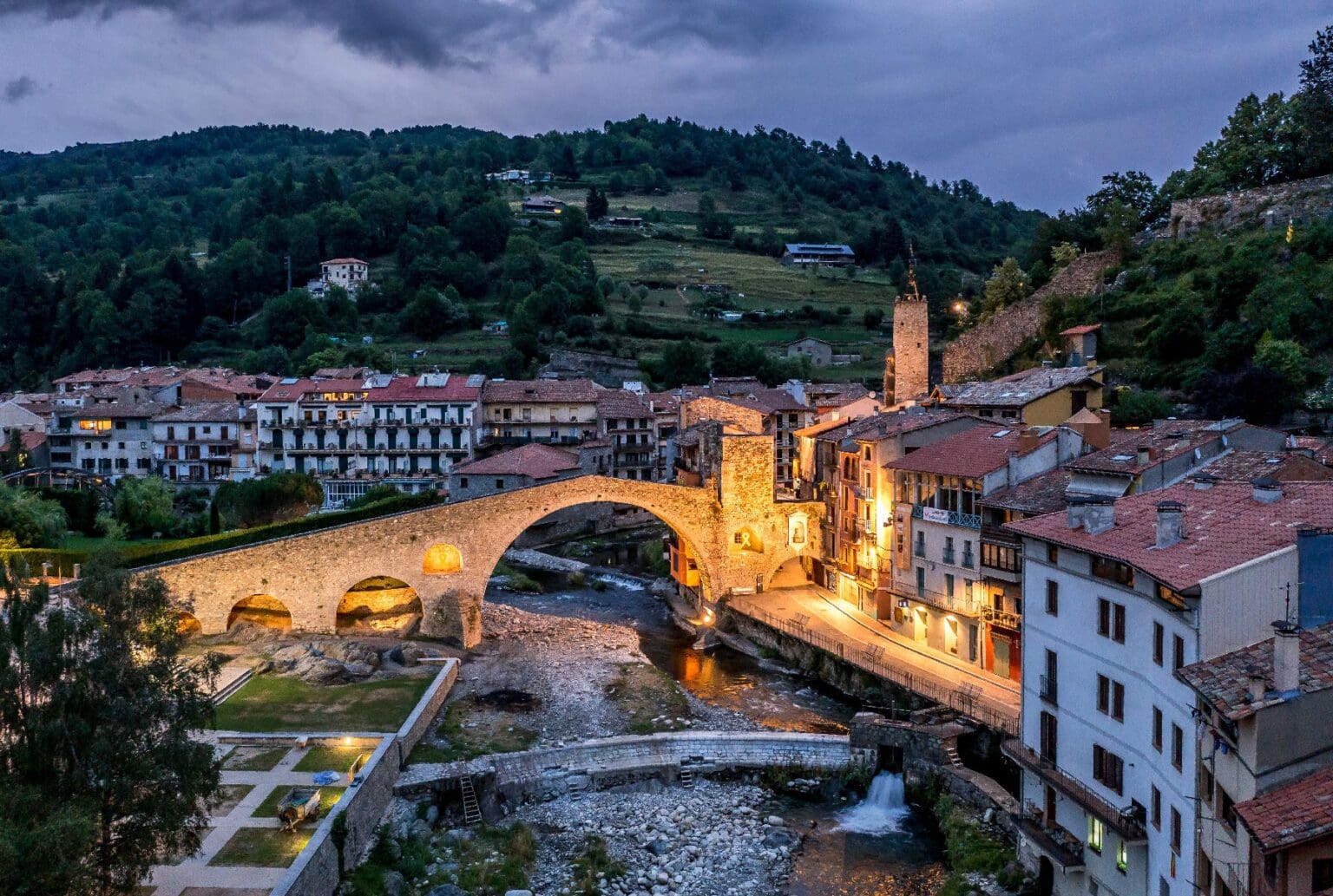
The Monastery of San Pedro, founded in the 10th century, is one of the most prominent examples of Romanesque architecture in Catalonia. The Church of Santa Maria, built in the 14th century, is famous for its impressive bell tower and its beautiful altarpiece. The New Bridge, built in the 12th century, is one of the most emblematic symbols of Camprodón and offers stunning views of the Ter River.
Location of Camprodón
Camprodón, located in the rich and diverse province of Girona, is situated in a privileged setting characterized by its impressive architecture and landscapes. This setting, where history and nature meet, offers a unique canvas for renovation and new construction projects.
In this regard, arch.cat has extended its influence beyond Barcelona, carrying out projects in Girona. In this case, in Camprodón. But also participating in the construction of holiday homes, tourist accommodation, and restaurants throughout the province, highlighting the architectural and cultural richness of Girona.
The strategic location of Camprodón, within walking distance of emblematic places such as Beget, the Vall de Nuria, and Ripoll, as well as its proximity to France and other significant towns within the Ripollès region, underscores its role as a cultural and tourist meeting point.
Located in the province of Girona, one of the four provinces of Catalonia, it contributes to the enrichment of the architectural and tourist legacy with lovely environments throughout the province. In this sense, Camprodón is 1 hour and 15 minutes by car from the city of Girona, with an enchanting journey driving through wonderful places such as Garrotxa, Besalú, or Banyoles.
| Journey | Time |
| Camprodón – Coll d’Ares (border) | 23 minutes |
| Camprodón – Ripoll | 27 minutes |
| Camprodón – Olot | 35 minutes |
| Camprodón – Girona (city) | 1 hour 15 minutes |
| Camprodón – Barcelona (city) | 1 hour 45 minutes |
A stroll through Camprodón
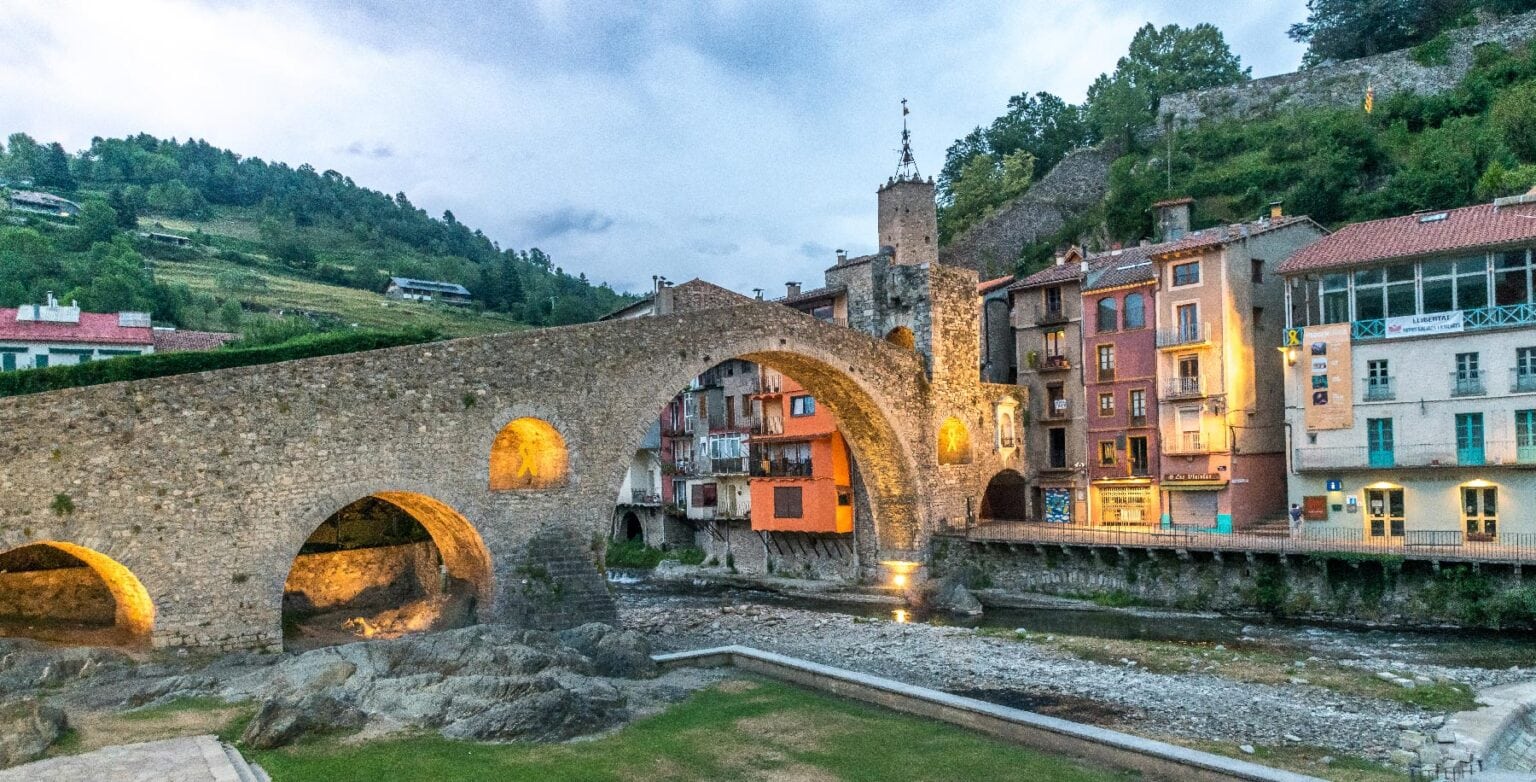
Taking a leisurely stroll through Camprodón is like taking a walk back in time. The village is dotted with architectural gems that tell stories of its past. One such gem is the iconic Pont Nou, a medieval bridge that crosses the Ter River. This stone bridge, with pointed arches and robust construction, has stood the test of time and remains an emblematic symbol of Camprodón.
Another must-visit site is the Monastery of Sant Pere, a Benedictine monastery founded in the 10th century. The monastery’s Romanesque cloister is a masterpiece of architectural design, with delicate columns and intricately carved capitals.
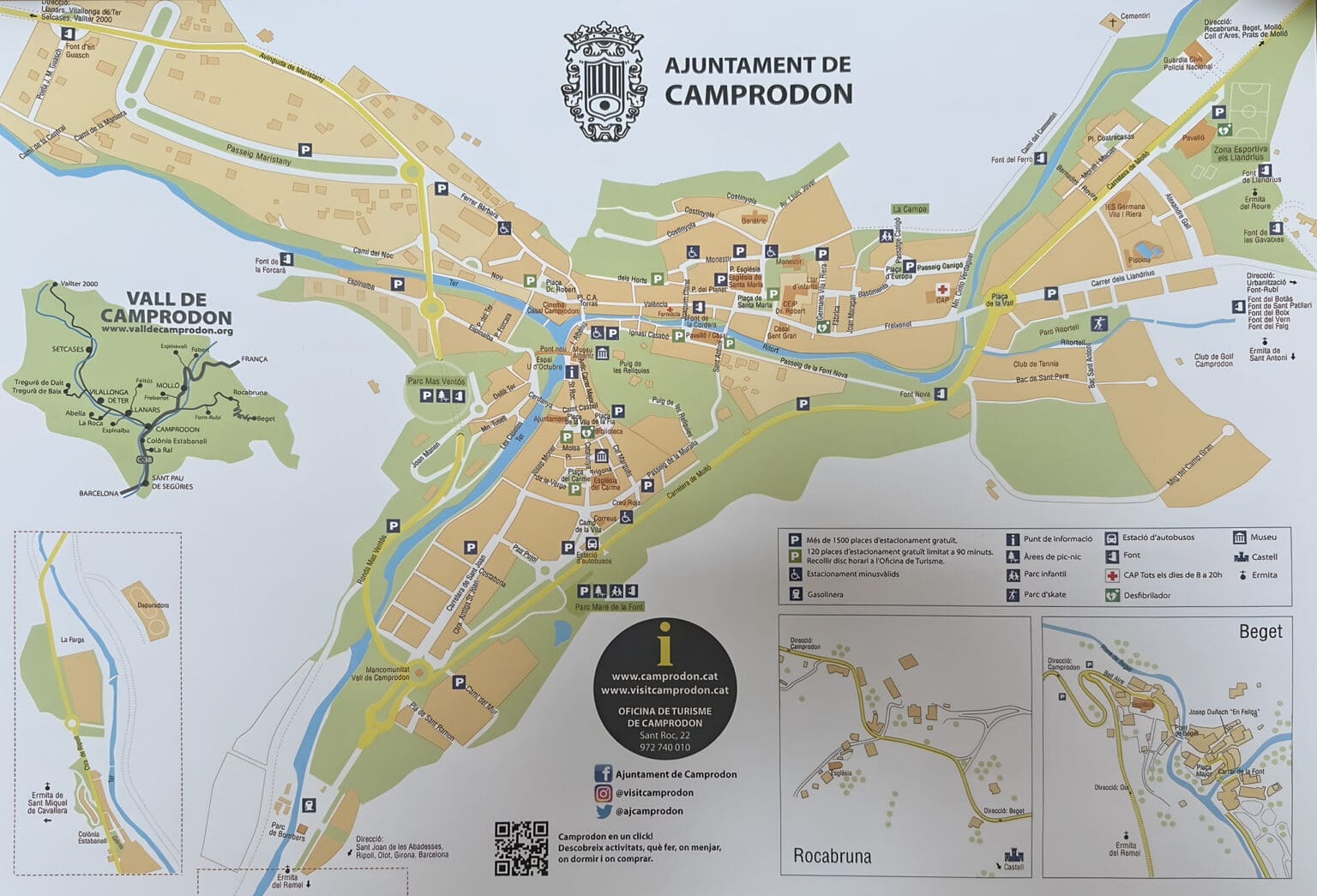
The main square of Camprodón should also be explored. Here you will find buildings with beautiful balconies and arcades that showcase the town’s unique blend of architectural styles.
Walking route through Camprodon (1–2 h) for a first visit
This route is perfect if you arrive in the morning or if you want a short but complete visit. Furthermore, it does not require great physical fitness.
- Start in the center: walk through the streets and squares of the old town.
- Down to the river: look for a stretch of the riverside walk to get into the atmosphere.
- Pont Nou: photo and short break (it’s worth it).
- Climb towards Sant Pere: visit the surroundings of the monastery.
- Santa Maria: complete the heritage block with the 14th-century Gothic style.
- Optional extra: Passeig Maristany if you have 30–45 minutes left.
And, if you feel like it, take a second walk without a map. Often, the best things appear when you get a little lost.
Architecture in Camprodón
The architecture in Camprodón is a blend of styles that reflect the rich history of the village. The oldest buildings are Romanesque in style, such as the Monastery of Sant Pere and the Church of Santa Maria. However, there are also examples of Gothic, Renaissance, and Modernist architecture.
One of the highlights of Camprodón’s architecture is the abundance of stone houses with red-tiled roofs. These houses, many of which date back to the 16th century, are a testament to the rich architectural tradition of the area. Additionally, Camprodón features several Modernist buildings, such as the Casa de la Princesa and the Casino, which add a touch of elegance and sophistication to the urban landscape.
The history behind the facades: the heritage of Camprodón
To truly appreciate the architectural beauty of Camprodón, it is essential to understand the history behind these facades. The town has a fascinating past dating back centuries, with influences from various cultures shaping its architectural style.
Camprodón was founded in medieval times and gained importance during the Middle Ages as a commercial center. This period left its mark on the village’s architecture, with Gothic influences evident in many buildings.
Every building in Camprodón has its own story to tell. From grand mansions that once belonged to wealthy merchants to humble houses that have been passed down through generations, each structure contributes to the narrative of Camprodón.
The reflection of Catalan Architecture: Color and Character
One of the first things that will catch your eye as you explore Camprodón are the vibrant traditionally built houses that line its streets. These charming buildings are known for their unique architecture, characterized by colorful facades and intricate details. Each house seems to have its own personality, with different colors, patterns, and decorations adorning their exteriors.
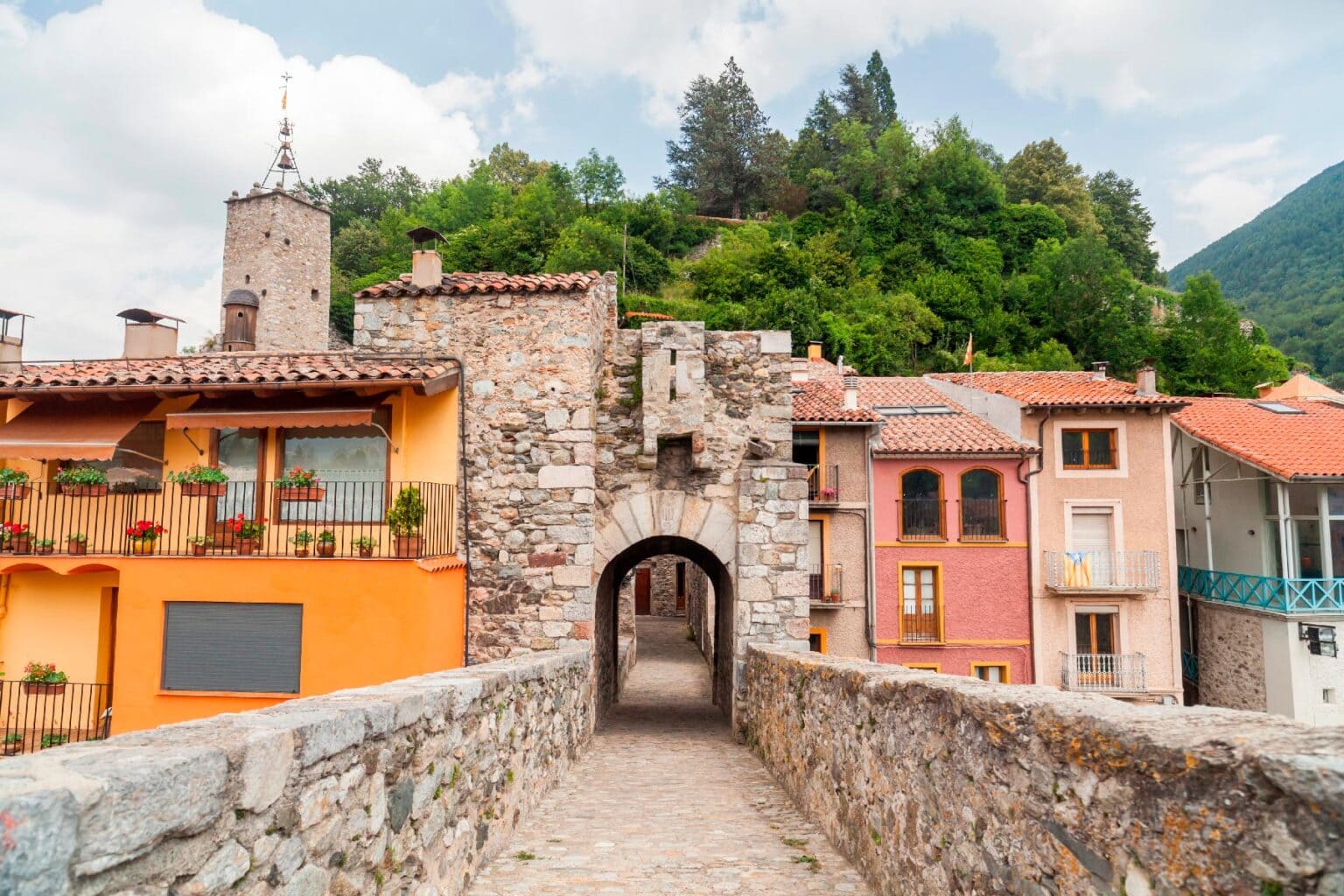
Walking through Camprodón is like stepping into a living canvas, where every corner offers a new burst of color and character. Catalan houses are not only beautiful to look at; they also reflect the history and culture of the region. Many of these houses have been passed down through generations, preserving their original charm and contributing to the rich heritage of Camprodón.
Preserving the Heritage of Camprodón
The beauty of Camprodón is preserved not only through respect and admiration but also through effort and investment. Residents are conscious of maintaining the aesthetics and charm of their homes. This commitment helps the town’s architectural heritage not only to be preserved but to evolve.
We, arch.cat Arquitectura, an architecture studio working in the province of Girona, highlight our participation in the comprehensive renovation of Mas Pomer in Camprodón. This emblematic project, located in a privileged mountain enclave and dating from the early 20th century, incorporates Modernist elements that, following the intervention, will be transformed into a charming boutique hotel.
Architectural delights off the beaten path
Beyond the best-known monuments, Camprodón hides numerous architectural treasures off the beaten path waiting to be discovered by intrepid explorers. By venturing off the main streets, you will stumble upon hidden courtyards, secret gardens, and tucked-away buildings that exude charm and mystery.
Exploring these hidden treasures will allow you to discover the lesser-known aspects of Camprodón’s architecture and provide a glimpse into the town’s rich architectural tapestry.
4 key architectural stops in Camprodon
1) Pont Nou (New Bridge), the symbol of the village
The Pont Nou is the most recognizable image of Camprodon. And not just because it appears in every photo: also because it perfectly summarizes the village’s relationship with the Ter river.
Regarding its dating, it is worth being precise: there are sources that place it in the 12th century and others that locate it in the 14th century. Therefore, the most rigorous approach is to describe it as a bridge of medieval origin, associated with the historical routes of the valley, with possible phases and renovations.
Quick tip: look at it from both sides. This way, you will also understand how the main arch “frames” the landscape.
2) Monastery of Sant Pere (Saint Peter), the Romanesque piece
The Monastery of Sant Pere is one of the keys to historical Camprodon. Its presence is solid and direct. In other words: here architecture has weight, supports itself, and marks the place.
What is also interesting is that it is not understood as an isolated monument. On the contrary, it functions as an urban node: it organizes streets, attracts activity, and gives meaning to the immediate surroundings. Therefore, if you like architecture, take a few minutes to observe proportions, volumes, and how it relates to the village’s layout.
3) Church of Santa Maria, Gothic and urban scale
Very close by is the Church of Santa Maria, described as a 14th-century Gothic temple. And it shows in its presence: it has a significant scale relative to the village fabric and, at the same time, acts as a landmark.
Furthermore, this proximity between Sant Pere and Santa Maria is a luxury for the visitor. In just a few steps, you pass from a more Romanesque and robust language to another of Gothic origin, with a different reading of verticality and space.
4) Passeig Maristany, the Camprodon of the promenade
If you want an urban contrast, end the tour with the Passeig Maristany. It is a wide, tree-lined, and more open promenade. And, although it may seem “only” a place for walking, it also tells a story: that of Camprodon associated with summer holidays, quiet life, and another way of inhabiting the mountains.
Therefore, if you are not in a hurry, look at the whole: alignments, gardens, facade rhythms, and how the promenade constructs an urban stage.
Eating in Camprodon: Culinary delights amidst architecture
The gastronomy of Camprodón is as rich and varied as its landscape. Local dishes are based on fresh, seasonal ingredients and reflect the influence of Catalan and French cuisine.
Classics that usually hit the mark
- Butifarra and grilled meats.
- Trinxat: humble and delicious if the day calls for warmth.
- Cheeses and cured meats from Ripollès and the valley.
- Traditional pastries, ideal for a snack or to take away.
And here is a trick: if you like cooking, buy two or three local products. Then, at home, the trip lasts a little longer.
Discover the surroundings of Camprodón: Gems to visit
If you are in Camprodón, we advise you to get to know its surroundings and its valley. Here we present some nearby points of interest that capture the essence of the Valley and its surroundings.
Molló Parc Adventure and Animal Park
Located in the heart of the Girona Pyrenees, Molló Parc offers a unique combination of an adventure park and an animal reserve. It is an ideal place for families and nature enthusiasts who wish to observe local fauna in a semi-natural environment and enjoy outdoor activities.
The Monastery of Sant Joan de les Abadesses
This impressive monastery, founded in the 9th century, is one of the most significant examples of religious architectural heritage in Catalonia. With a rich history and stunning architecture, the Monastery of Sant Joan de les Abadesses invites visitors to step back in time and explore its artistic and cultural treasures.
The Pont Nou of Camprodón
Although located within Camprodón, the New Bridge is an unmissable point of interest that serves as a gateway to the rest of the Valley’s wonders. This bridge, with a history dating back to the 12th century, is emblematic of the town and offers unforgettable views of the Ter River.
Setcases and Vallter 2000
For lovers of the mountains and winter sports, Setcases and the Vallter 2000 ski resort represent the perfect destination. Setcases is a charming mountain village that serves as a base for exploring Vallter 2000, where activities such as skiing, snowboarding, and hiking can be practiced in high mountain landscapes.
The Vall de Camprodón: Hiking and Nature
The Vall de Camprodón is a paradise for hikers and nature lovers. With routes that traverse varied landscapes, from lush forests to alpine peaks, the Valley offers an immersive experience in the heart of the Catalan Pyrenees.
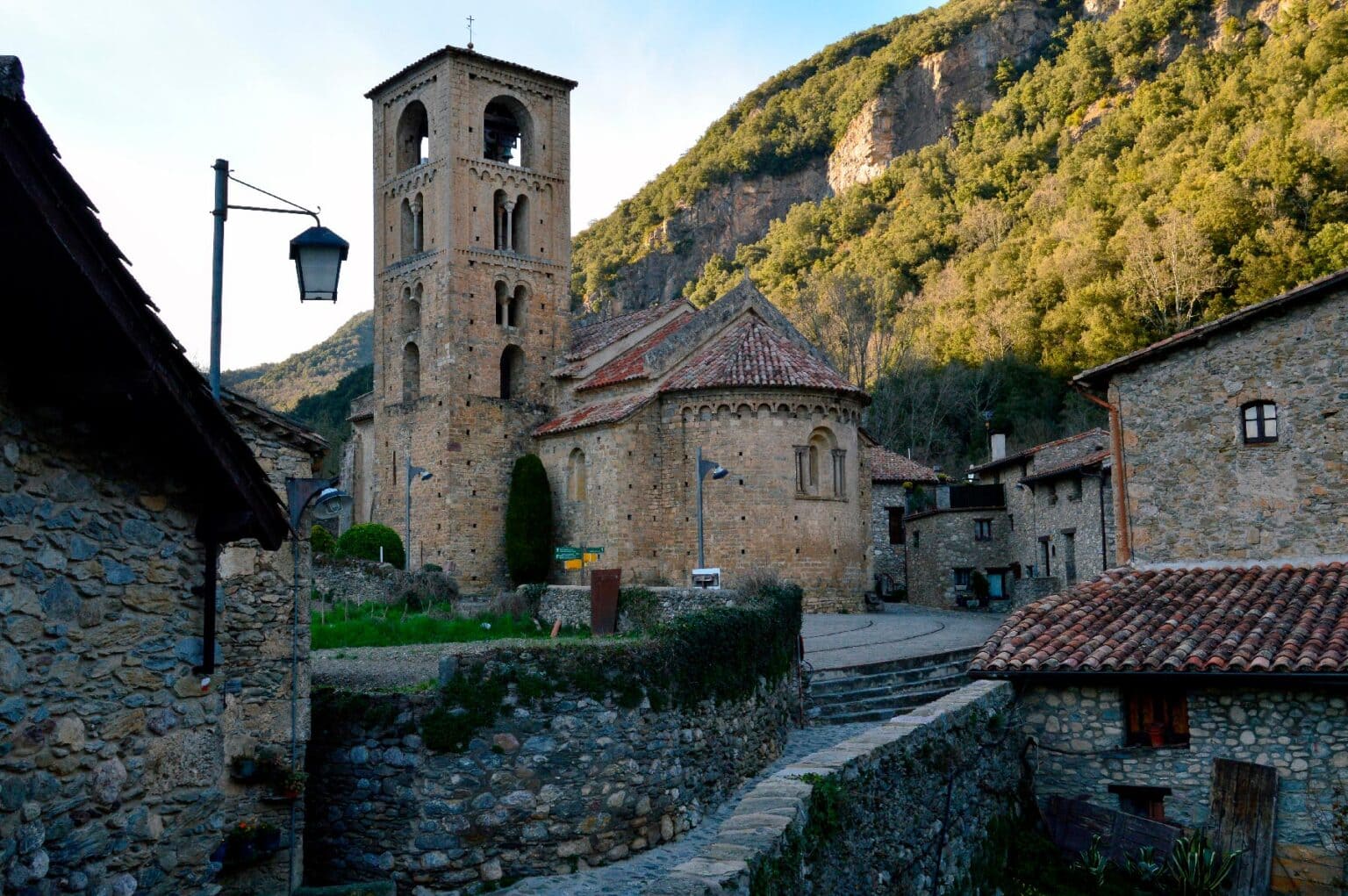
Beget: A journey to the past
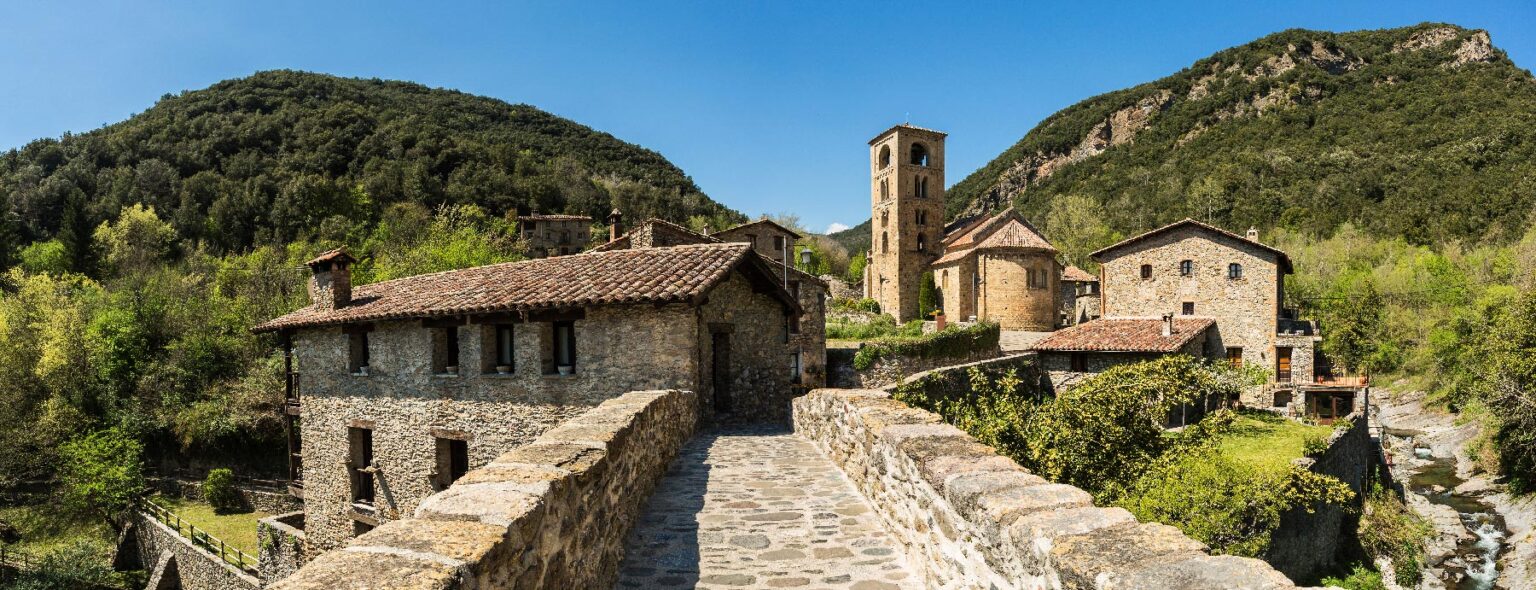
The small village of Beget, with its cobbled streets and stone houses, seems frozen in time. Its Romanesque church of Sant Cristòfol is an architectural gem that attracts visitors for its beauty and its idyllic natural setting.
Espinavell and the Mule Market
Espinavell, another picturesque village near Camprodón, is known for its traditional Mule Market, held every October. This unique event offers a glimpse into the region’s livestock traditions and is an authentic cultural experience.
1-day getaway in Camprodon and the Vall de Camprodon
If you only have one day, this plan usually works because it balances walking, heritage, and surroundings.
Morning (urban Camprodon)
- Old town
- Pont Nou
- Sant Pere
- Santa Maria
Midday (lunch without complications)
- Mountain cuisine or local menu. Afterwards, buy something “to go” (cured meat, cheese, or sweets).
Afternoon (valley and villages)
- Quiet option: Passeig Maristany + riverside walk.
- Full option: short trip to Beget (stone and calm) or towards Setcases (alpine atmosphere).
- In season, it also fits to head to Vallter 2000 for panoramic views and high mountain air.
This way, you also turn Camprodon into a base and the valley into a “bonus,” which is usually the most rewarding plan.
Activities and Tourism in Camprodón
Camprodón offers a wide range of activities for visitors. History buffs can explore the town’s cultural heritage, visiting monuments such as the Monastery of San Pedro and the Church of Santa Maria. Nature lovers can enjoy outdoor activities such as hiking, cycling, and fishing.
Additionally, Camprodón has a vibrant cultural scene, with numerous festivals and events throughout the year.
Culture and events in Camprodon
Pay attention to this point, because it was easy to stumble upon an event that doesn’t belong. Camprodon has its own calendar and it is worth mentioning it properly.
- Festa Major de Sant Patllari (June): one of the liveliest moments of the year.
- Isaac Albéniz Music Festival (summer): cultural programming and concerts.
- Fira de la Galeta (October): a weekend with a gastronomic and sweet focus.
- Fira de la Puríssima (December): Christmas atmosphere, products, and fair.
Mind you: dates may vary by year. Therefore, before traveling, it is advisable to check the municipal calendar.
Accommodation and Services in Camprodón
Camprodón offers a wide range of accommodation for visitors, from hotels to rural houses and campsites. Many of these accommodations are located in historical buildings, which adds a touch of charm and authenticity to the stay. At arch.cat, we have worked extensively on the entire restoration of Mas Pomer, an incredible accommodation that is currently still in the construction phase.
Additionally, Camprodón has a variety of services for visitors, such as restaurants, shops, and tourist information. Restaurants offer a wide range of options, from traditional Catalan cuisine to international dishes. Shops sell a variety of local products, such as cheeses, cured meats, and wines.
And if you have a house in the valley (or are considering it), here is an interesting topic: renovating in the mountains is not just about aesthetics. It is also about efficiency, comfort, and respect for the character of the place. At arch.cat, we work precisely with that balance: preserving what gives identity and, at the same time, adapting the home for real and current use.
Tips for Visiting Camprodón
If you plan to visit Camprodón, there are a few things you should keep in mind to ensure you have the best possible experience. Firstly, it is important to plan your trip in advance. This includes booking your accommodation, researching the activities and events available during your visit, and familiarizing yourself with local rules and regulations.
Secondly, it is important to consider the weather. Camprodón has a mountain climate, which means it can be quite cold in winter and quite warm in summer, although summer nights are very mild. Therefore, it is important to bring appropriate clothing for the weather.
Thirdly, it is important to respect the environment. Camprodón is located in an area of great natural beauty, and it is important to do everything possible to preserve this environment for future generations.
In summary:
- Plan by season: in the mountains, the weather changes quickly.
- Comfortable footwear: the best of Camprodon is seen on foot.
- Don’t rush: the charm lies in the details and the pauses.
- Respect the environment: marked routes, zero waste, and care for the landscape.
- If you take photos: return to the Pont Nou at a different time. It changes completely with the light.
In conclusion, Camprodón is a true hidden treasure in the Pyrenees. With its stunning landscape, its rich history and culture, and its vibrant gastronomic scene, this picturesque village offers a unique experience for visitors. So if you are looking for a destination that offers a mix of nature, history, and gastronomy, Camprodón is the perfect place for you.
FAQ: frequently asked questions about Camprodon
Pont Nou, old town, Monastery of Sant Pere, and Church of Santa Maria. If you have time left, add Passeig Maristany.
The Pont Nou. Furthermore, it is the most recognizable image of the village due to its scale and its location over the Ter river.
It is of medieval origin and, depending on the source, can be dated between the 12th and 14th centuries.
It is described as a 14th-century Gothic temple, with a very marked urban presence.
Spring and autumn are ideal for walking. In summer there is more cultural life, and in winter it fits with a mountain atmosphere (and snow nearby).
Beget and Setcases are the classics. Molló (if you are traveling with family) and Sant Joan de les Abadesses for heritage also fit well.
Yes. In fact, it is one of the best bases for exploring the valley and making short getaways around it.
Camprodon is the official name in Catalan, while Camprodón is in Spanish.